When the Group Outgrows the Minibus
Most of the trips we arrange are for small groups, but some days call for a full-size coach: a wedding with fifty guests, a choir and its supporters, a whole club on its annual outing. One pullman gran turismo with 49 to 57 seats and underfloor holds keeps them all together.
What makes it a coach in Italian law
Any vehicle seating more than nine, driver included, is a bus, and Legge 218/2003 governs hiring one with its driver. The company needs an authorisation from the region where its registered office sits, valid throughout Italy, and a certified copy of that document stays aboard every bus it covers. Behind the wheel sits a driver with a category D licence plus the CQC card for professional passenger transport.
The hours are logged by a tachograph, and a speed limiter is fitted where EU rules require one.
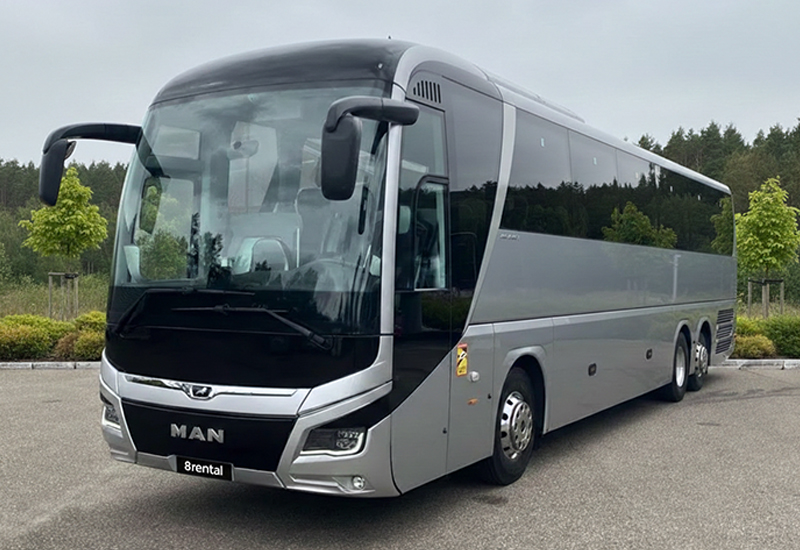
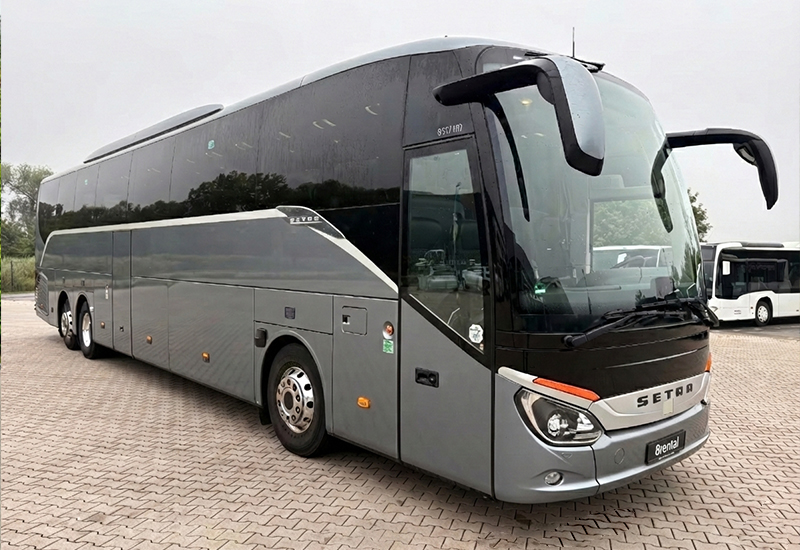
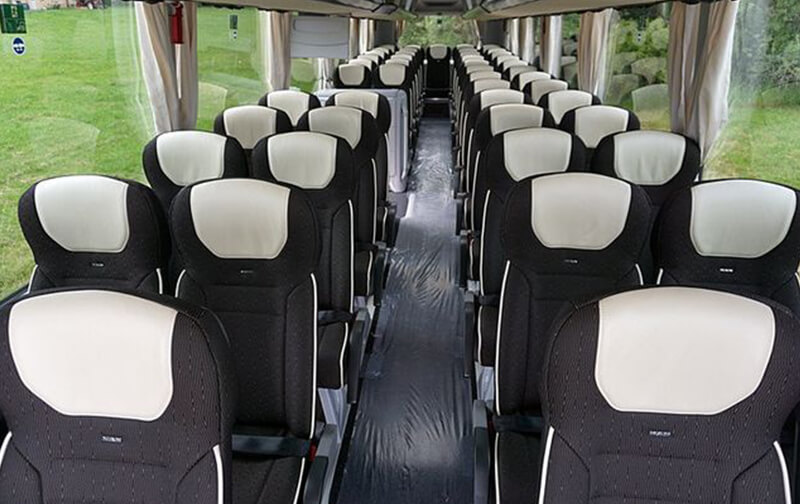
What it is like on board
- Drivers of buses and of vehicles carrying people professionally must not drink any alcohol before driving: the limit is zero (art. 186-bis c. 1)
- A tachograph is required as set by EU law, and speed limiters where EU directives require them (art. 179 c. 1)
- Buses and trolleybuses with a gross weight over 8 t are limited to 100 km/h on motorways and 80 km/h on other roads outside built-up areas (art. 142 c. 3 f)
- The driver holds a category D licence, for vehicles built to carry more than eight people besides the driver, and the driver qualification card for passenger transport (carta di qualificazione del conducente, CQC) (art. 116 c. 3 p and c. 11)
- Under the Codice della Strada, a bus (autobus) is a vehicle for carrying people with more than nine seats including the driver (art. 54 c. 1 b)
- A certified copy of the authorisation is kept on board every bus registered under it (L. 218/2003 art. 5 c. 5)
- The company needs an authorisation from the region (or the delegated local authority) where it has its registered office; the authorisation has no territorial limits, and international work also needs international professional competence (L. 218/2003 art. 5 c. 1 and 3)
- Hiring a bus with a driver in Italy (noleggio di autobus con conducente) is governed by Legge 218/2003: a professional company carries a group for one or more trips requested by a client, or offered to a pre-formed group, with the period, the duration and the total amount for the bus agreed in advance (art. 2 c. 2)
Speed, hours and long legs
Coaches over 8 t have their own ceiling: no faster than 100 km/h on the motorway and 80 km/h on ordinary roads outside towns, and lower wherever signs say so. Long transfers therefore take a little longer than by car. The driver drinks nothing alcoholic before setting off, under the zero limit that covers every professional carrying passengers.
Where something smaller is better
Size has limits in some of Italy's loveliest places. The SS163 along the Amalfi Coast is off limits to any bus longer than 10.36 m. Big coaches bound for Bellagio leave the narrow lake road, closed above 10.5 m, and climb over the Valassina and the Ghisallo instead. And no coach drives to the Cinque Terre villages: groups go on by train or boat from La Spezia or Levanto.
For days like these, a midibus or a pair of minibuses does the job, and the rest of the trip can still run on the big coach.
What travellers ask us
Is there room for everyone's suitcases?
Plenty more than in a minibus: the holds under the floor are why coaches suit airport and cruise transfers with full luggage. Mention anything bulky, such as instruments or bikes.
Can a coach do a multi-day tour?
Yes. EU limits on driving and rest shape each day, so the itinerary builds in breaks and overnight stops.
Can a coach drive into historic centres?
Rarely. Most cities run permit schemes for tourist coaches, with set-down points outside the core. The operator buys the permits and confirms the stops.
More trips we arrange
- Team Outings in Italy, in One Minibus or Several
- School Trips in Italy, Planned Around the Class
- Away Days for Teams, from Five-a-Side to a Full Squad
- Getting Your Wedding Guests There and Home Again
- Italy's Wine Country, with Someone Else at the Wheel
- Day Trips at Your Own Pace, in a Minibus with a Driver
- From the Ship to Rome, Naples, Genoa or Venice
- Accessible Days Out for the Whole Group